

Continuous Problem-Solving Operations
The process of problem-solving operations never stops. Teams continue their work after they deliver change to take evaluations and make more change. Learn about the essence of continuous problem-solving in this article.


Audio Version
Here's an audio version of this article:
Overview
Change that lasts takes a lot of work. Nowadays, anyone can make a vibe coded product in hours. But that's not the only moment that matters. Just because an app exists doesn't mean people will use it over time. It doesn't mean they'll keep coming back. It doesn't mean it will solve problems that people experience. The act of creation comes from a lot of process, collaboration, buy-in, and idea testing. It takes a lot of communication. It requires you to empower those around you to care about the stake in the result. It requires problem-solving. It takes a large amount of energy to keep something going at market.
The Process of Change
The process of change making happens in cycles that never end. You see things happening in the world, identify the change, make something, and succeed or fail. Then the cycle continues. You start over with new changes. Operations professionals create living processes for teams to work together towards change. The lifecycle of work has many steps:

Intake Milestone
Steps
- Identify key goals
- Measure success
- Build your team
Deliverables
- Team agreements
- Project summary
- Kickoff
Continuous Discovery Milestone
Steps
- Form hypotheses
- Do research
- Analyze and repeat
Deliverables
- Research insights
- Current experience maps
- Scenario-based problem statements
- Positioning statements
- Unique value
Vision and Scope Milestone
Steps
- Identify the most important problems to solve
- Identify scenarios to support
- Commit to near-term outcomes
- Commit to long-term outcomes
Deliverables
- Vision boards
- Release-level scope of outcomes
- Strategy definition
- Success metrics
Requirements Milestone
Steps
- Break down the work
- Generate buy-in
Deliverables
- User stories
- Acceptance criteria
- Task flows
- Backlogs
Install Milestone
Steps
- Make the changes
Deliverables
- Prototypes
- Code
- Content
Test and Launch Milestones
Steps
- Evaluate the change
- Put the change in place
Deliverables
- Testing Plans
- Feedback Loops
The Two Approaches to Work
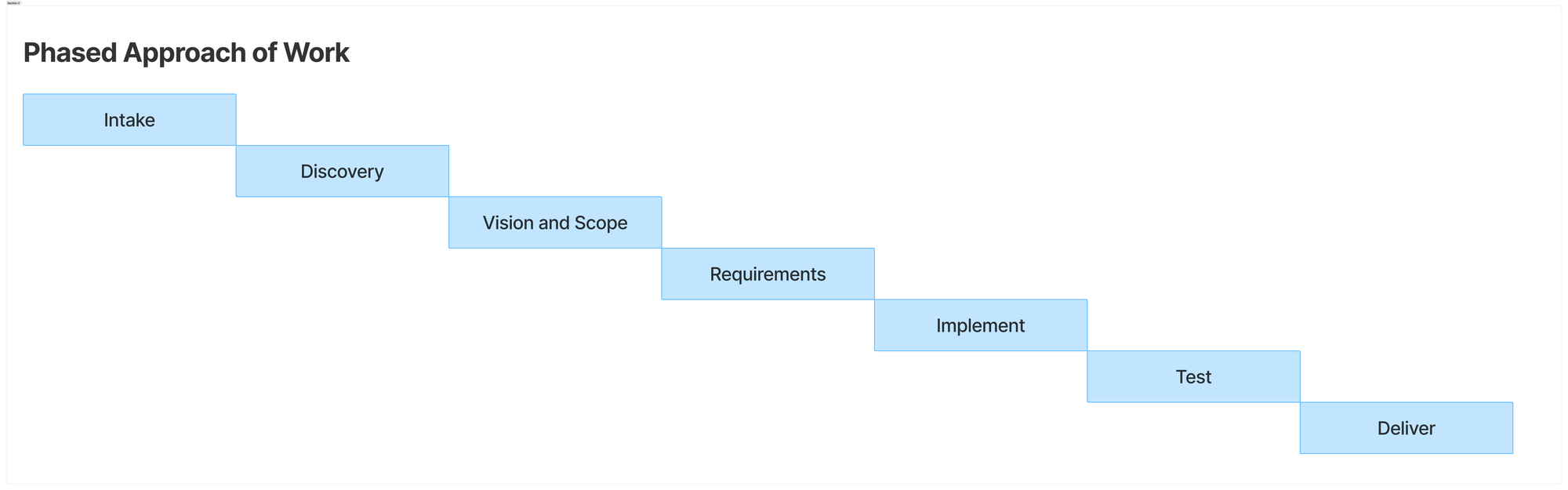
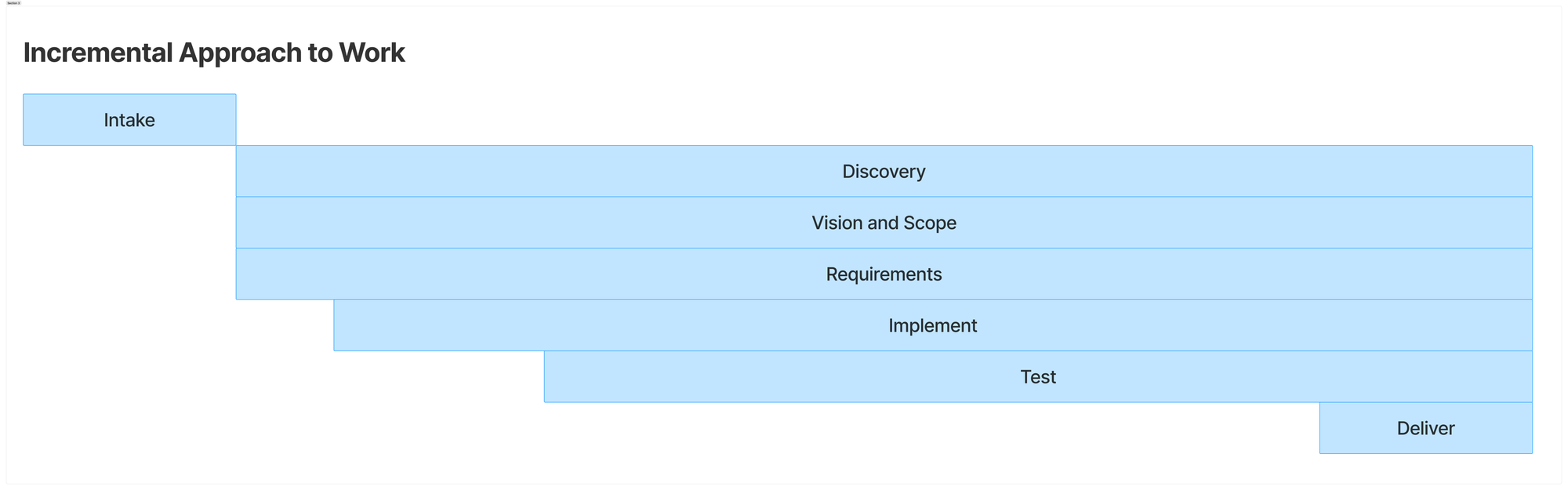
You can perform these cycles in one of two ways: the Phased Approach or the Incremental Approach. Both of these have their risks:
- A Phased approach - work happens one step at a time, and launches at the end. (Some people call this "Waterfall").
- An incremental approach - different work happens in parallel, and launches as you go. (Some people call this "Agile").
When teams start these lifecycles, it's not enough to talk about the ways this work happens. People need to show the work. There may be resistance to change, and it's important to talk about. The best that ProblemOps specialists can do is build a shared language and understand others. They must influence the changes in the process.
Phased Approach
Incremental Approach
ProblemOps Within the Lifecycle
Problem-solving operations exists in the entire lifecycle. It shows up in the definition, the commitment, the collaboration, and the change making for each milestone.
- In intake, people define success criterion.
- In discovery, people define and analyze scenario-based problems.
- In vision and scope, people commit to the scenarios they want to change and develop language around the change.
- In requirements, people define how to deliver the change.
- In implementing, people make the change together.
- In testing, people evaluate the changes based on what's been communicated so far.
Once change is made, we go right back to the beginning to take what's learned and make more change. It's called a "lifecycle" because it's continuous. When one change is made, a lot of other things get affected in systems. Positive and negative change affects a lot of touchpoints. Teams must continue the cycle of learning and delivery so that they can always be sure they're evaluating the change.


