

How to "Keep the Lights On" Proactively
Here's an article about how to build both reactive and proactive work. We need to support both when working with others in change.


Audio Version
Here's an audio version of this article:
"Keep The Lights On" Mode
Maybe you've heard this term before: "Keep The Lights On".
It's a great term to describe companies and teams that focus on reacting to last-minute needs.
"Forget innovating, we have to Keep The Lights On". This could mean:
- Do whatever makes the customer happy.
- Do whatever Sales team needs to win new contracts.
- Do whatever is decided in that monthly executive meeting.
Teams who are trying to "keep the lights on" de-prioritize innovative work. There's only so many hands to pitch into the delivery. Meanwhile, long-term initiatives get shifted, and delayed. There are "last-minute fixes" no one saw coming. You never know what they're going to ask if you're not anticipating it.
This is common for startup teams. It also happens in large companies. It happens whenever moments arise when priorities shift to "keeping the lights on". In the end, after companies spend time "keeping the lights on", they will want to shift back to innovative work. What do we, the arbiters of change, do? Are we doomed to face the "whiplash" of shifting modes?
Proactive Mode Includes Reactive Mode
We, ProblemOps specialists, have control over this. This is a journey that never ends for teams. It is important to Keep the Lights On. It's also important to make new change. We negotiate our way through "keeping the lights on" and delivering new change. We must build trust and influence to do it.
We can look at it both ways. We can see this as a problem or an opportunity for change. We, ProblemOps specialists, can anticipate "Keeping the lights on" as necessary work. Teams can't just prioritize only proactive work or reactive work. The key is to support both.
Whatever happens, don't give up. Don't stay in reactive mode. Help the company shift the momentum. Help them organize the common outcomes (even if an outcome is "Keep the lights on"). Help everyone balance between reactive and proactive modes. This takes energy but provides a big return.
We can use the 4 C's of the Language of Change to bring a balance between reactive and proactive modes.
Document What's Happening Right Now
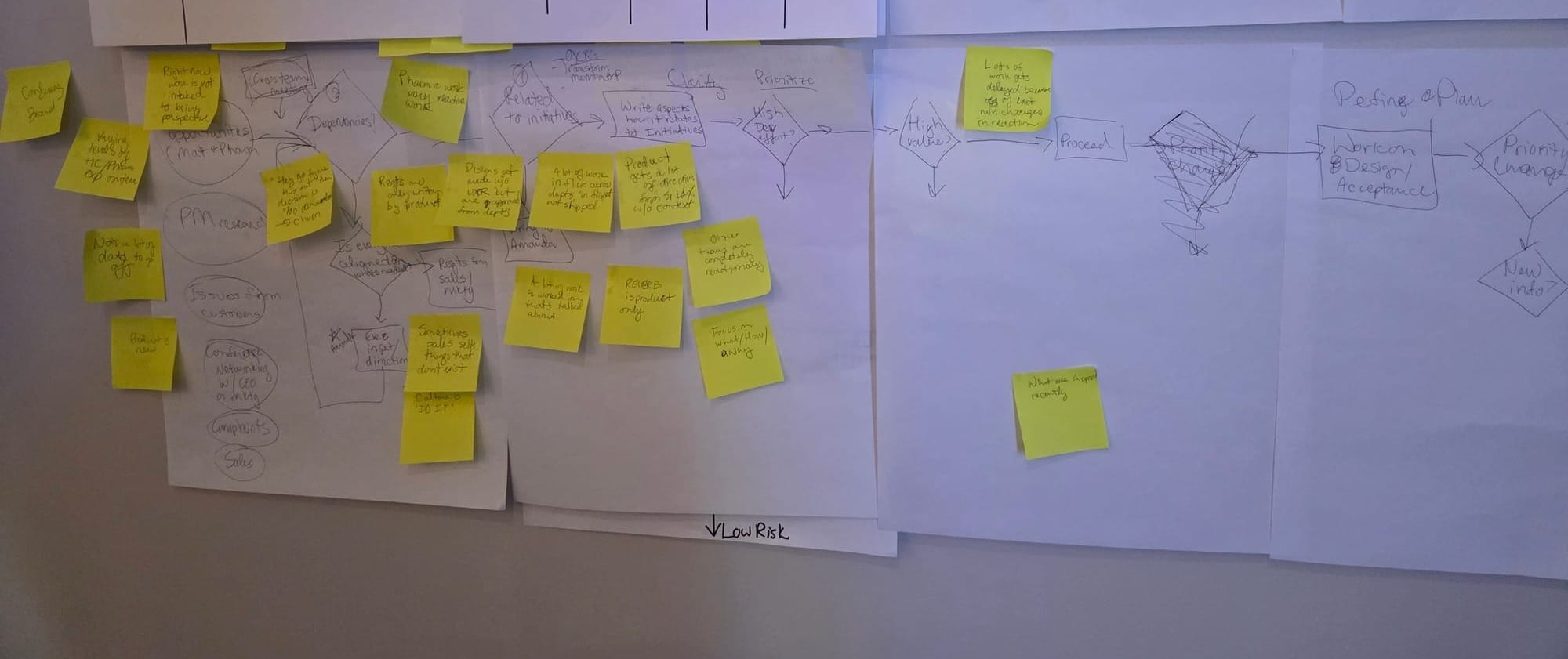
Map what's going on in your company now. When you can visualize the process, you can pinpoint where challenges happen. You can spot opportunities to work together, and show people the reality.
Scenario-based problem statements help you communicate what's happening and why it's a problem. Everyone can rally around the reasons that things should change. Teams who build empathy with others using these can make allies in the change.
Then, put the two together: add your problems to the current process map. This is a powerful visual that gets everyone aligned. Use it as a tool to generate buy-in for change in the ways you work.
Build a Vision and Scope for Proactive Mode
How do you know as a team what to start changing? You don't! Everything we do as change makers is just a guess. We could be wrong. We could be right. We could be missing important things. Even if we've collected research data, we could be wrong.
All we can do is guess. We can make judgment calls, and get ready to shift decisions. We can pivot and remain adaptive.
So at any moment, prioritize the problems to solve first. You can use a prioritization matrix to map assumptions about importance of problems to solve.
Then you can map the problems to outcomes in scope of the change with Vision and Scope.
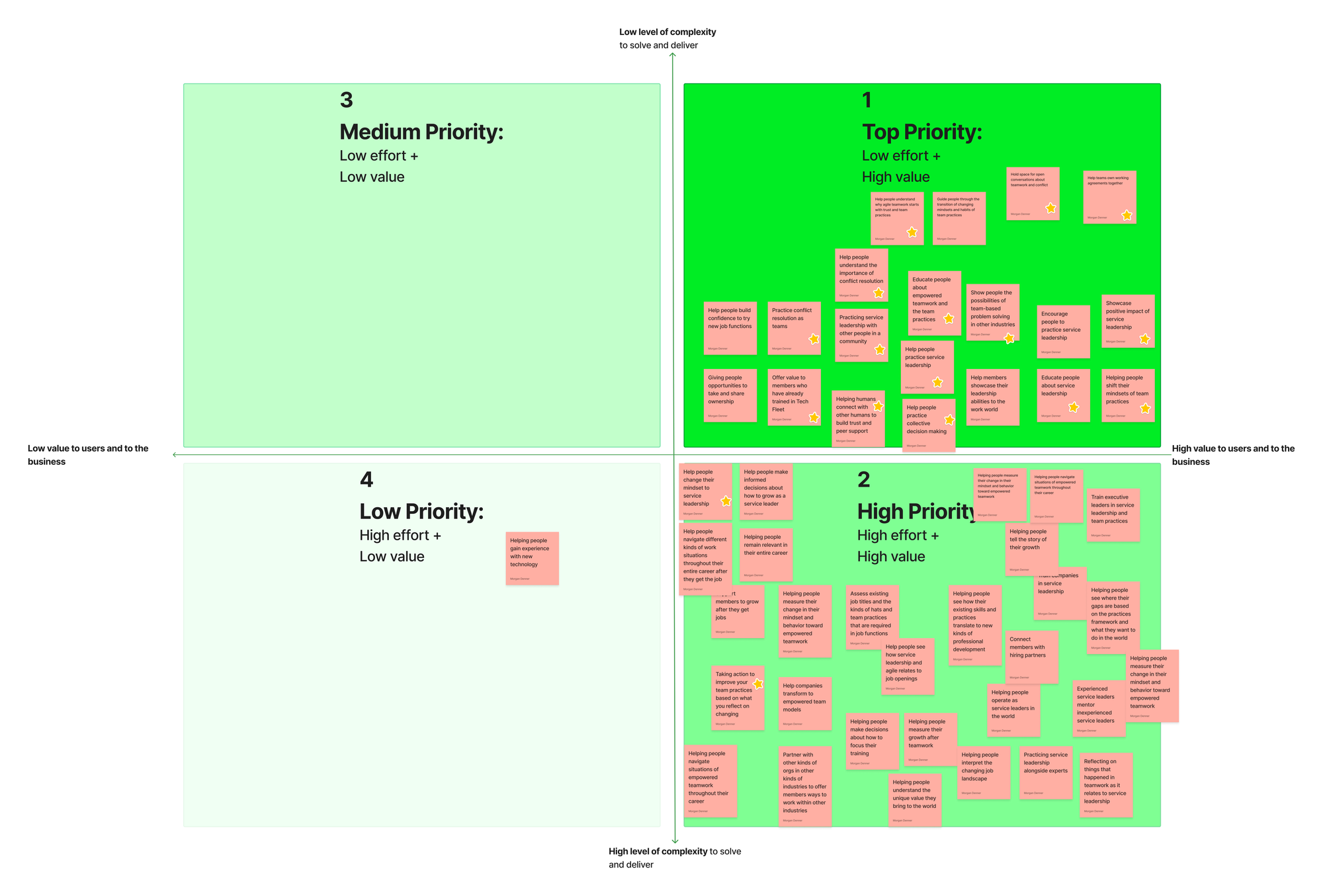
ProblemOps specialists build vision and scope for changes in their process. Just like they'd make vision and scope for products and services. It does help to document the outcomes and build commitment (The second C in the 4 C's). Start by picking the most important problems you want to change first. Create a vision and scope of the change to help everyone agree. Then move on it.
"Keeping the lights on" should be an outcome in the scope of change. Teams should anticipate "reactive" work so that they are expecting it. When they do, they can work on both proactive and reactive work. If there is no reactive work, then great! If there is reactive work, they saw it coming.
Show, Don't Tell
The best way to work is to deliver change quickly, tiny chunks at a time. You can always collect feedback and adjust. This is the lifecycle of continuous problem-solving operations. Get the change out the door early and often. Show results and impact. Always learn from what you change.
The less you talk about "shifting out of reactive mode", and the more you show results, the more allies you will build. Let's not talk about the work. Let's do it. Help others who don't share the same language make their own conclusions.
- Build commitment to the outcomes.
- Break the outcomes down to smaller outcomes.
- Deliver change in chunks.
- Bring people into the process.
With these tips you can balance meeting the reactive needs while also innovating.


